

Combining Golf with Environmental Stewardship
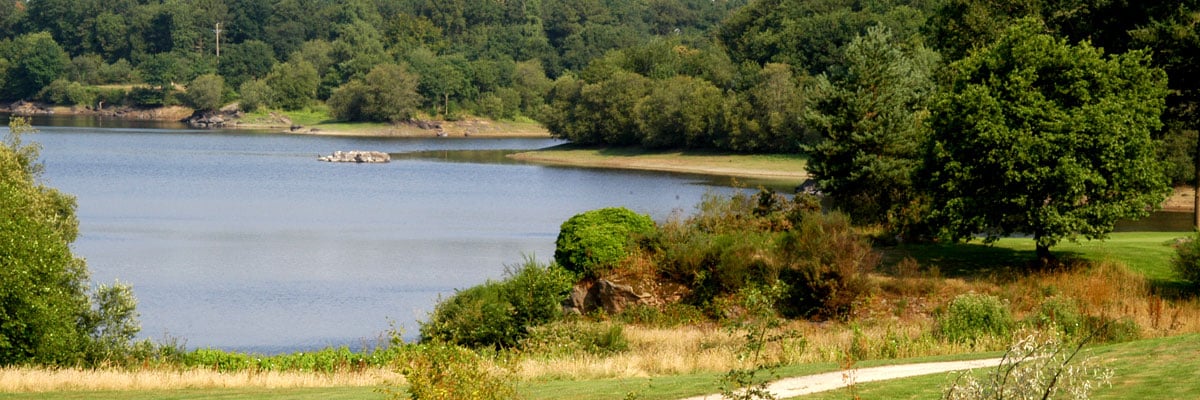
Ever since the golf course was built in the 1980s, we have shared the area with a drinking water reservoir (1,300,000m³): the Etang de Mirloup.
This nature reserve (a “Natura 2000” site) runs right through the golf course and is a major part of its charm. However, it imposes a number of constraints on us: This reservoir is managed by the Syndicat Intercommunal des Eaux de Beaufort, which serves 36 municipalities, representing more than 200,000 households in the summer, which explains the seasonal variations in water levels.
This reserve was created in the 1960s with the construction of a dam that can be seen from the clubhouse or from the 9-hole course. The golf course is located right in the heart of the watershed. Since 2006, this coexistence has evolved into a close collaboration.
Grass is the best natural filter
We are now actively involved in preserving the quality of our water resources. Since grass is the best natural filter, we manage and maintain our grounds in accordance with environmental regulations, particularly those governing water flow. All the water flowing through our course before reaching Mirloup passes through settling ponds, where its flow is slowed, allowing all particles to settle out. The golf course helps protect our water resources.
We've turned constraints into strengths:
- The use of plant protection products has been reduced by two-thirds.
- We do not use total herbicides.
The National Golf and Environment Charter
Various representatives of the golf industry (the FFG, greenkeepers, directors, architects, manufacturers, etc.), as well as government agencies and their respective ministries (Youth and Sports, Agriculture, Environment, etc.), agreed in 2006 on a water charter designed to guide all stakeholders in the industry toward a sustainable development approach. This initiative has just been reinforced with the release of a new “Golf and the Environment” charter.
All of these stakeholders are committed to:
- Select and promote grass species that require less water and inputs.
- Use Water Wisely
- Expand the use of alternatives to chemical inputs—such as manual labor and the use of organic products—and aim to improve the health of turf by prioritizing biological pest control over chemical pest control
- Train staff, be vigilant about enforcement…
- Establish a public health alert system through a network of designated “grenkeepers” within an observatory
- Promoting Biodiversity
- Communicating with Users
For their part, government agencies are committed to promoting, encouraging, and supporting these initiatives. However, it will also be important to raise awareness among our users and help them accept that their lawns may be less green, and may sometimes have patches or weeds.